

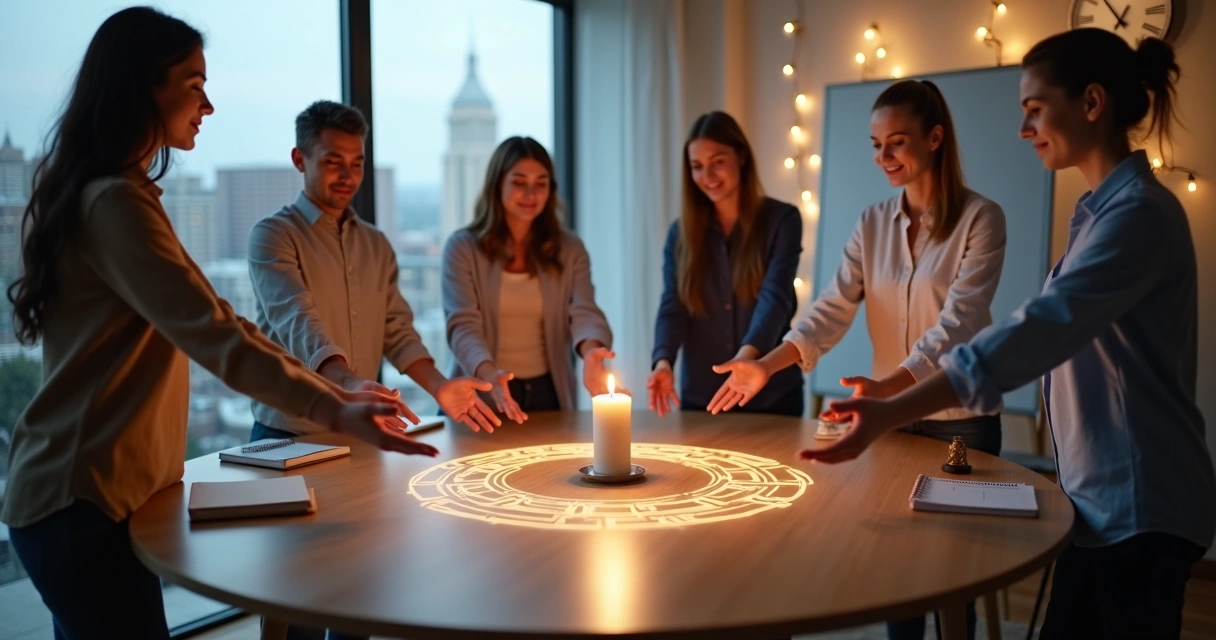
We often think decisions fail because people lack skill or data. In our experience, that is only part of the story. Many poor team decisions begin much earlier, in the way a group meets, speaks, listens, and notices what is happening between people.
That is where team rituals matter. A ritual is not empty routine. It is a repeated practice with a clear purpose. It helps people pause, name what matters, and align around reality before they act.
Team rituals improve decision quality by making attention, emotion, and responsibility more visible.
We have seen this in simple moments. A team enters a meeting with tension after a missed target. Nobody says it at first. The discussion sounds logical, but the room is defensive. Then one person asks a regular opening question: “What are we not naming yet?” The silence breaks. The real issue appears. The decision changes. So does the level of honesty.
Why rituals shape awareness
Shared awareness is the team’s ability to see the same situation with enough clarity to act together. This does not mean total agreement. It means people have access to the same live picture of risks, feelings, priorities, and facts.
Without rituals, teams drift toward noise. The loudest voice sets the pace. Urgency replaces reflection. Assumptions go unchecked. People react to fragments, not to the whole.
Rituals slow that drift. They create a stable point in the week or in the day where people return to a few grounding actions.
- They make hidden tension easier to name.
- They help people separate facts from interpretations.
- They bring repeated attention to shared goals.
- They reduce impulsive choices made under pressure.
In other words, the ritual is not the result. It is the container that helps better results emerge.
What repeats shapes perception.
How rituals affect decision quality
Good decisions rarely come from speed alone. They come from clear framing, emotional steadiness, and enough trust for disagreement to surface before commitment. Rituals support all three.
First, rituals improve framing. A team that begins each decision meeting by stating the problem in one sentence is less likely to solve the wrong issue. That sounds small. It is not. When people define the problem differently, they can leave the same meeting with five private conclusions.
Second, rituals support emotional regulation. This matters more than many teams admit. Fear, frustration, pride, and relief all affect how people judge options. A lab study from Aarhus University on team emotions and decisions found that emotional states can influence whether teams stay with known routines or consider new ones. We think this matters in daily work. When rituals help a team settle, speak openly, and process stress, they widen the range of choices people can truly consider.
When a team cannot regulate its emotional state, it tends to confuse urgency with wisdom.
Third, rituals improve commitment after the choice is made. If everyone has been heard, if risks were named, and if ownership is explicit, the team is less likely to sabotage the decision through silence, delay, or private resistance.
What effective rituals look like
Not every repeated meeting is a ritual. Some are just habits with a calendar invite. Effective rituals have intention, structure, and emotional usefulness.
We usually notice a few traits in rituals that work well:
- A clear reason for existing.
- A simple format people can follow.
- Enough safety for candor.
- A link between reflection and action.
For example, a weekly check-in can begin with three prompts: What moved forward? What feels blocked? What are we avoiding? This is short, but it opens both task awareness and relational awareness.
Another strong ritual is the pre-decision round. Before a major call, each person answers in turn:
- What do I see as the main risk?
- What assumption may be wrong?
- What would make this decision easier to support?
That kind of structure changes the quality of discussion. People stop performing certainty. They start contributing judgment.

Common mistakes that weaken rituals
We have also seen rituals fail. Usually, the problem is not the idea. It is the way the practice gets emptied of meaning.
A ritual weakens when:
- It becomes performative and people say what sounds correct.
- It is too long and drains attention.
- Leaders ask for honesty but punish discomfort.
- There is reflection, but no follow-through.
One team we observed had a weekly “open space” for concerns. On paper, it looked healthy. In practice, nothing raised there changed. After a few weeks, people stopped bringing real issues. The ritual remained. Trust did not.
A ritual only builds awareness when people see that truth has consequences.
This is why leadership behavior matters so much. If a leader asks for input, then rushes to defend their own view, the ritual teaches caution. If a leader listens, summarizes what was heard, and adjusts when needed, the ritual teaches participation.
How to make rituals part of team culture
We think the best rituals are light enough to repeat and deep enough to matter. They do not need grand language. They need consistency.
A good starting point is to choose one friction point in team life. It may be rushed meetings, recurring confusion, silent disagreement, or poor handoffs. Then create one ritual that addresses that point directly.
Examples include:
- A two-minute arrival pause before hard meetings.
- A closing round where each person states one commitment.
- A monthly review of decisions that worked and those that did not.
- A brief emotional temperature check after periods of strain.
The goal is not control. It is consciousness in action. Teams do better when they can sense what is happening while it is still changeable, not only after damage appears.

Conclusion
Team rituals may look simple from the outside. A check-in. A pause. A review question. A closing round. Yet these repeated acts shape what a team is able to notice, say, and decide.
We believe the strongest teams do not wait for conflict or confusion to force awareness. They build practices that keep awareness alive. That is how better decisions become more likely. Not by chance, but by design.
Small rituals can change the tone of a room. Then the quality of thought. Then the quality of choice.
Clear teams choose better.
Frequently asked questions
What are team rituals in the workplace?
Team rituals in the workplace are repeated group practices with a clear purpose. They can include weekly check-ins, decision reviews, opening rounds, or short reflection moments. Their role is to create consistency, support honest communication, and help teams stay aligned in how they work together.
How do rituals improve team decisions?
Rituals improve team decisions by helping people slow down, name assumptions, and surface concerns early. They also help regulate the emotional tone of a meeting, which affects judgment. When teams have a reliable way to hear different views and clarify the real issue, decisions tend to be more grounded and easier to support.
Are team rituals worth implementing?
Yes, team rituals are worth implementing when they respond to a real team need and stay meaningful over time. They can reduce confusion, support trust, and improve decision follow-through. The value does not come from the ritual alone, but from the quality of attention and accountability it creates.
How to start a team ritual?
We suggest starting small. Pick one repeated team problem, such as unclear meetings or unspoken tension, and create one short practice to address it. Keep the format simple, explain the purpose, and repeat it long enough for people to feel its effect. Then review whether it is helping and adjust if needed.
What are examples of effective team rituals?
Effective team rituals include weekly alignment check-ins, pre-decision risk rounds, short arrival pauses before hard conversations, and monthly reviews of past decisions. The most effective ones are easy to repeat, safe enough for honesty, and directly linked to better awareness and clearer action.